

(original post 24 Aug 2019)
You may have read that title and, if you’re a Christian, become a bit worried about this post. I assure you it’s nothing to worry over so bear with me. Coincidentally your “worry” or “concern” ties directly into the point of this post. What we need to understand is that when the Bible was written, there were no chapter and verse divisions among the books. Those came about centuries later to aid in referencing. With exception to wisdom literature (i.e. Proverbs) we should not look at an individual verse of Scripture to discern truth. Instead, we need to look at several verses (paragraphs) to understand the text properly. The title for this post is borrowed from Greg Koukl, who if you listen to, will hear him say that phrase from time to time with the same justifications I will highlight.
As mentioned in a previous post, hermeneutics is a crucial part to understanding Scripture. Simply put, hermeneutics is how to properly study and interpret Biblical text by looking at several different aspects. One of these is context. As Adrian Rogers would say, “text without context is pretext.” Pretext is putting forward an idea which shadows truth. As it applies to Scripture, pretext would be interpreting a verse to say something or apply to a situation to which it contextually does not. In other words, someone is making claims which are not Biblically supported.
One example of this is the often misused “Judge not lest ye be judged” (Matt 7:1). First, while this appears to be KJV, the correct wording is “Judge not, that ye be not judged.” Often this is used when correcting someone. Funny thing, the person responding with “judge not” is pronouncing judgment on -the other person so their position is self-defeating. What is overlooked is that the context of Matt 7:1-5 is that Jesus is instructing how to properly pass judgement—don’t be a hypocrite.
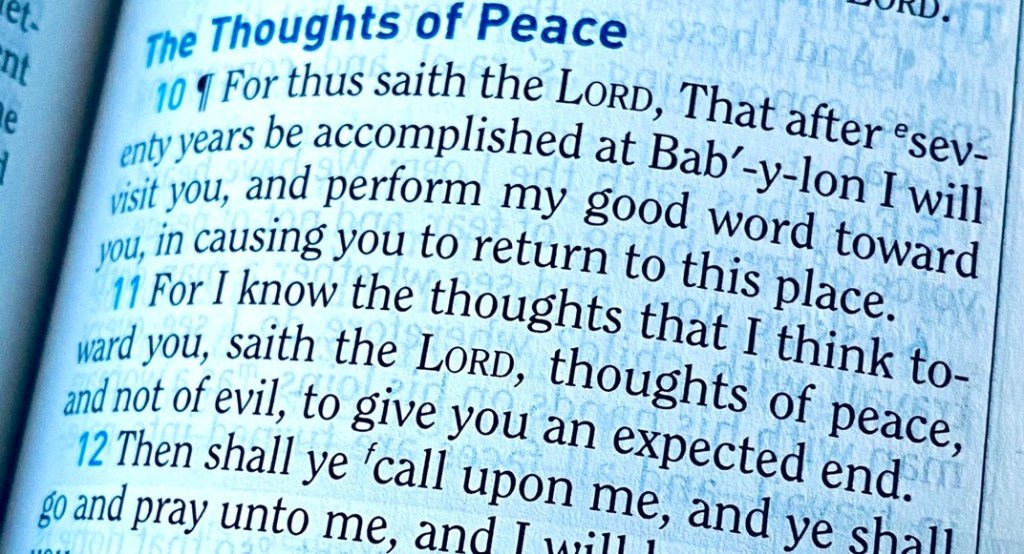
Another verse which people look at frequently, and some use as a motto of sorts is Jeremiah 29:11, “For I know the thoughts that I think toward you, saith the Lord, thoughts of peace, and not of evil, to give you an expected end.” This sounds amazing! God has everything in order; life should be good, peaceful, and prosperous. It says so right there in the text! Right, right? What about the next chapter? Jeremiah 30:11, “For I am with thee, saith the Lord, to save thee: though I make a full end of all nations whither I have scattered thee, yet I will not make a full end of thee: but I will correct thee in measure, and will not leave thee altogether unpunished.” Huh? Why don’t people choose this as a life verse? It starts out well with God saying He’s with us to save us. Then He says that due correction and punishment will be meted out. Why choose one verse and not the other? Context is important. Jeremiah is writing to Jews in exile in Babylon. These texts are descriptive—telling us what was going on for a specific group, during a specific time in history, in a specific situation. It does not have universal application for us today unless a person is a 6th century B.C. Jew in captivity in Babylon under Nebuchadnezzar.
Here’s another one: “For where two or three are gathered together in my name, there am I in the midst of them.” (Matt 18:20). This verse is frequently used for prayer meetings or when a prayer group gathers. Two questions, 1) is that what Jesus is talking about in the text? and 2) as a Christian, is Jesus ever not with you when you’re alone? The answer to both of these is “no.” Matthew 18:15-20 deals with church discipline. Jesus declares that if a Christian wrongs you, tell them. If they don’t listen, take one or two and confront the person again. If they still won’t listen, bring it before the church body because you have two or three witnesses to the situation—this is where verse 20 comes in.
The exception I gave regards the book of Proverbs. Proverbs are wisdom literature—short one to two sentences which speak to profound truth. These can be studied individually (and often linked to other similar verses in proverbs) to illustrate deep wisdom. If you looked at my Bible, you would see alternating highlighter colors throughout the book of Proverbs with one or two verses the same color and the next one or two in a different color. I’ve tried to link similar themes in the same color for a given chapter. One should still utilize a good hermeneutic to understand proper context and context has been the theme of this post.
What can easily occur when we look at an individual verse of Scripture is we inject our own meaning into the text. This is called eisegesis and quickly leads to heresy. Proper handling of the Biblical text is called exegesis—where we draw out the truth within and then seek to apply it to our lives. When we look at a single verse it’s not difficult to take it out of context and make it say what we want it to. Those “pastors” (I used scare quotes intentionally) who peddle the prosperity gospel are quite adept at misrepresenting Scripture and Biblical truth. We should follow Paul’s guidance to Timothy in 2 Tim 2:15-18 (please read for yourself).
I cannot emphasize enough the importance of reading the Bible in proper context. Never read a Bible verse. Instead, read several so you can understand the situation being addressed. When you do this, you’ll see how many verses we’ve heard preached on or used in conversation or at prayer meetings have been misrepresented. For further illustration regarding this topic, I would refer you to the video American Gospel: Christ Alone released by Living Waters (Ray Comfort).
~In Christ!
 Way Truth Life Apologetics
Leave a comment