

(original post 14 Aug 2019)
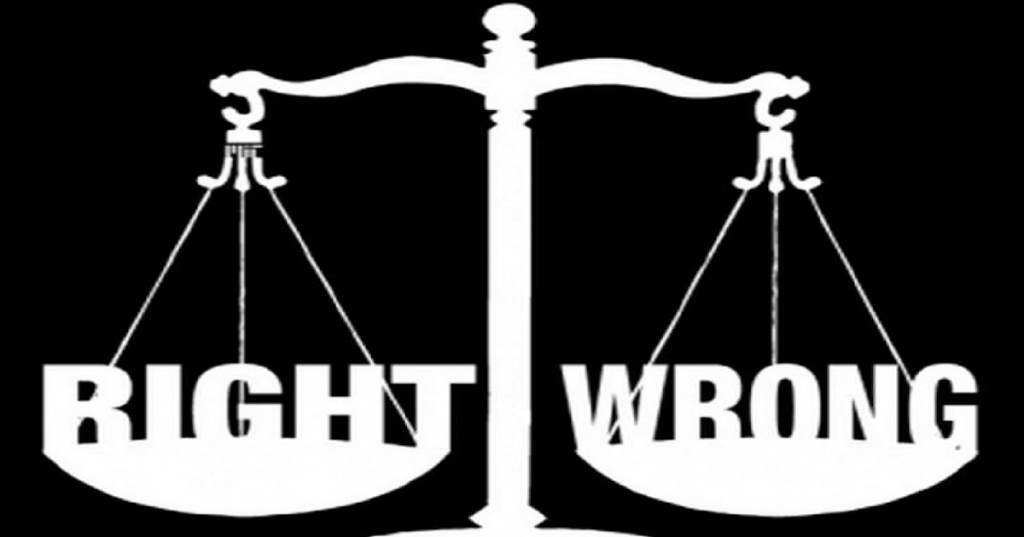
Morals are subjective. There is no objective morality. These are two statements which are often made against those who hold to objective morality; that there are things which “ought” to be done and “ought not” to be done. Some will argue, for example, that when I claim “abortion is murder” that it may “be true for you, but not for me.” They claim my moral position is subjective because they feel differently toward the issue.
Often this comes from those holding to atheist / naturalist / materialist worldview ideology. Okay. My question is this, on what grounds does a naturalist argue that something is “right” or “wrong,” “good” or “bad / evil?” The natural universe is an amoral system. Cats kill mice, orcas kill seals, lions kill gazelles—no one calls this wrong or evil, it’s just nature that predators hunt and kill prey; the strong dominate the weak. If naturalism is true, then humans are merely cognizant animals which also fall under the amoral system. So, on what grounds does a naturalist make the claim that Hitler’s final solution was immoral and the coalition’s response moral? Can the naturalist say that North Korean regime’s treatment of its citizens is morally reprehensible and inhumane, as if there’s a way government “ought” to treat its citizens?
One problem with naturalism is that not all cause / effect relationships involve only physical realities. Emotions, reasoning, logic, intelligence, language, justice, goodness, and numerous other factors are immaterial; no one can draw the molecular diagram for the love. How many carbon atoms in the justice molecule? How much does reason weigh? What is the color and shape of goodness? These questions are nonsense. Why? Because immaterial realities exist apart from the physical; they interact in ways, however the naturalist cannot account for the immaterial.
So, let’s get back to the issue of morality. If all is “natural” meaning physical, what is the physical cause of morality? What is the foundation upon which a naturalist can claim that something “ought” to or “ought not” to be? Returning back to the example concerning abortion: I have moral convictions that abortion is murder (true for me) where a naturalist feels abortion is not murder (true for him / her). How can the naturalist make the next step to claim my position is “wrong” and I “ought not” feel that way about the issue? I could simply flip the “true for you but not for me” on them: abortion isn’t murder (true for you) where I feel abortion is murder (true for me). The argument hasn’t gone anywhere; am I now in the right because I used the magic phrase? This is the catch-22. Naturalists will argue that morals are subjective, but then tell someone that their position is objectively “wrong.” So, they embrace subjectivity while denying objectivity, then make objective claims. See the problem?
~In Christ
 Way Truth Life Apologetics
Leave a comment