

(original post 21 Sep 2020)
If one were to look at the world, especially as we see things played out in the news, it is undeniable that the world is in a state of decline. Chaos abounds. Violent crime is on the rise. Cities are burning. People are angry. Children are abducted, sold into sex slavery, and often never seen again by their loved ones. People are divided along the very lines that are described as discriminatory (age, sex, race, religion, etc). The world is tearing itself apart and things do not look like they will get better. With an outlook this bleak, where is hope?
Merriam-Webster defines “hope” as, “to cherish a desire with anticipation: to want something to happen or be true; trust; to desire with expectation of obtainment or fulfillment.[1]” Within this secular definition, hope is described as having a desire to see something come to pass, usually favorably. As I thought on this, I questioned how one holding to a naturalistic worldview can justify their idea of having “hope” for something.
In naturalism, every event in life is an effect from a previous cause. I get something to eat because I am hungry. I’m hungry because my stomach digested what I previously ate and I’ve used energy since my prior meal. Naturalism describes the world as a series of dominos falling into one another, knocking each one down, in a chronological series. Where then, does the concept of “hope” come into play? How can one have a desire for a preferred outcome and not just accept the predetermined series of outcomes based on a chain of cause and effect events? To “hope” as a naturalist, one is declaring (consciously or subconsciously) that the naturalist view is flawed. There is no logical or justifiable reason to have “hope” in a naturalist worldview.
Biblical Hebrew defines “hope” as “expectation,…thing that I long for.[2]” The word “hope” first appears in the book of Ruth, Chapter 1, as Naomi is directing her daughters in law to return home after their husbands (Naomi’s sons) have died. She declares that she is old, she has no husband, and if it were possible for her to bear sons, would these two women wait for them to be old enough to marry? In her illustration, Ruth is being rhetorical, yet she is also making a naturalist argument. For Ruth or Orpah to desire that Naomi marry, bear sons, and for them to marry thus remaining her daughters-in-law is an absurd thought which Naomi is making to drive them away.
Herein lies the difference between a naturalist’s error in considering “hope” and a Christian’s justification for it. Hope boils down to wanting to see a different outcome than what is logically or predictably likely to occur. If one holds to a naturalist view, “hope” is a nonsensical thing. Naturalism is hopelessly bound to an unchangeable fate resulting from a chain of cause and effect events; it’s a position that is locked in. The Christian, however, believing that God can intervene / intercede in the world and bring about a different outcome, has a solid justification for having “hope.” There is an expectation for something longed for, and God is able to meet that expectation, so long as it is in His will to do so. The naturalist has no such justification.
In the New Testament Greek, “hope” is defined as, “to expect or confide:—(have, thing) hope (-d) (for), trust…to anticipate, usually with pleasure); expectation (abstr. or concr.) or confidence:—faith, hope.[3]” This is one of the main characteristics of Christians. Christians have “hope” which is grounded in God. The Bible describes example after example of God interacting with people and situations in a supernatural way; impacting the outcome by bringing to pass something that would not otherwise have occurred. At its root, this is the definition of a miracle.
Not every event outcome is an instantaneous alteration from what “should have occurred” to what did occur because of God’s influence. Often times God was working behind the scenes and over the course of days, weeks, months, years, or longer, setting events in motion so that at the point of need or our crying out to Him, we see His hand reaching in and bringing an answer to our prayers. This is not to paint God in a corner as a supernatural Santa Claus. When it comes to His answering prayers, He does what is in His will and for His glory. Sometimes the answer is “no,” sometimes it’s “not now / wait,” and sometimes it’s “yes.”
So, in today’s world, with all the turmoil, strife, destruction, anger, murder, kidnapping, sexual abuse, etc, all the negative, terrible events taking place, where is “hope?” The naturalist has no logical, rational answer. The idea of “hope” is a violation of their worldview. The Christian, on the other hand, can cling to “hope” and embrace its idea because it is rooted in God. God is able to bring about a different outcome than what should naturally occur.
When it comes to the notion of life and death, Jesus of Nazareth, the Messiah and Son of God, is our only hope! Naturalism sees life as a temporary existence in this reality, followed by an eternal non-existence when one’s heart stops beating. Christians understand that this life is temporary, but when the heart stops, life does not necessarily cease. Rather life continues in a different form, in the presence of God. Christians have “hope” for a new, eternal life, because Jesus provides that for us!
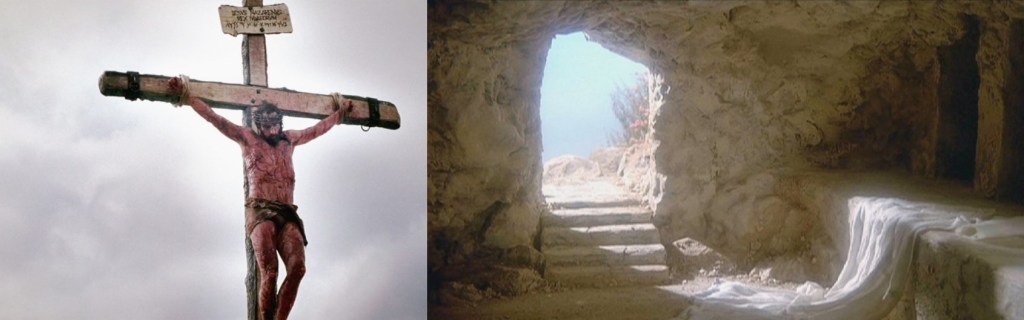
If you are feeling hopeless, if this world and its issues are weighing you down, if it seems like the walls are caving in and there is no one to help you, please turn to Jesus. Christians have a message of hope rooted in the Gospel of Jesus. It is not a “hope” based on myth, rather a “hope” that is evidenced in historical fact and a confidence founded on the God Who created the universe, sustains its existence, and sacrificed Himself for each and every one of us. If you are in need of hope, look to Jesus and you will find “hope,” and so much more!
~In Christ!
[1] https://www.merriam-webster.com/dictionary/hope
[2] Strong, J. (2009). A Concise Dictionary of the Words in the Greek Testament and The Hebrew Bible (Vol. 2, p. 126). Bellingham, WA: Logos Bible Software.
[3] Strong, J. (2009). A Concise Dictionary of the Words in the Greek Testament and The Hebrew Bible (Vol. 1, p. 27). Bellingham, WA: Logos Bible Software.
 Way Truth Life Apologetics
Leave a comment