

The third post in this series, this will focus on the teleological argument. The root of the word is from the Greek (τέλος) meaning end, conclusion, completion, close, finally, etc. This argument posits that the universe appears to have been designed for a purpose. “The teleological argument moves from design to a Designer. Forms of the teleological argument can be found in early Greek philosophy. It can be found in Socrates (Xenophon’s Memorabilia 1.4.4ff.); Plato (Phaedo), and Philo (Works, of Philo 3.182, 183.33). But it came to fruition later in the middle ages and modern world…[1]” William Paley formulated the most popular version of this argument and utilized the illustration of a watchmaker to drive home the point. The argument is as follows:
1. Every design had a designer.
2. The universe has highly complex design.
3. Therefore, the universe had a Designer.[2]
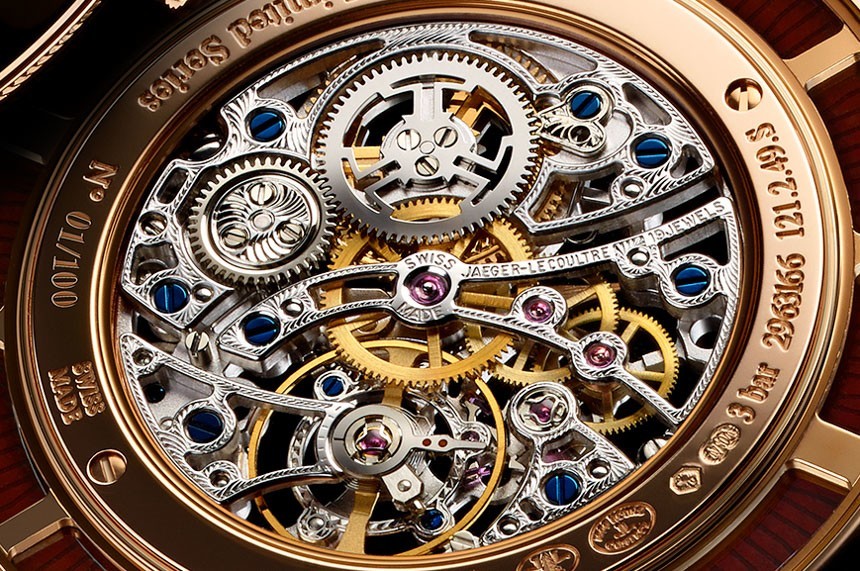
Think of a watch. The sleek shape and form it possesses. Turn the watch over and remove the rear cover. Depending on the type of watch, you may find a battery (or at least a battery housing). If you probe further you will find the gears (or perhaps circuitry for a digital watch). Each component bears the signature of design, each being assembled together to create this small, functioning device which we use to tell time. (It should be extremely cumbersome to carry a sundial around everywhere—and a sundial is also designed). “Paley insisted that if one found a watch in an empty field, one would rightly conclude that it had a watchmaker because of its obvious design. Likewise, when one looks at the even more complex design of the world in which we live, one cannot but conclude that there is a great Designer behind it. Let us put the argument in summary form (ibid.).
1. A watch shows that it was put together for an intelligent purpose (to keep time): (a) It has a spring to give it motion. (b) It has a series of wheels to transmit this motion. (c) The wheels are made of brass so that they do not rust. (d) The spring is made of steel because of the resilience of that metal. (e) The front cover is of glass so that one can see through it.
2. The world shows an even greater evidence of design than a watch: (a) The world is a greater work of art than a watch. (b) The world has more subtle and complex design than a watch. (c) The world has an endless variety of means adapted to ends.
3. Therefore, if the existence of a watch implies a watchmaker, the existence of the world implies an even greater intelligent Designer (God).[3]
The point is, there are features of design that are evident in the world; watches, buildings, motor vehicles, electronics, etc. No one can reasonably argue that these things came to exist merely by a chance encounter of their elemental components and “evolved” into what we see and employ today.
Design is easy to see in the universe; there is evidence of design just about everywhere one can observe. Someone must exert more energy and effort in denying the evidence of design and trying to spin a different interpretation / explanation of how things came to be. One such attempt was made famously by Richard Dawkins in his work The Blind Watchmaker (trading on Paley’s analogy). Dawkins’ stated, “Biology is the study of complicated things that give the appearance of having been designed for a purpose.[4]” On the very first page of his work, Dawkins sets out to refute design and disprove an argument for God’s existence.

In spite of Dawkins assertions, we can take the same approach (Paley’s) when we look at biological systems. The human body is one of the most complex, organic machines we find. Much work to the complexities and the evidence of design within the biological sphere of reality has been done by organizations such as the Discovery Institute. Brilliant thinkers and scientists such as Michael Behe and Stephen Meyer have worked exhaustively to explain design in creation by looking at proteins, DNA, and elements of irreducible complexity as termed by Behe. In his book, Darwin’s Black Box, Behe writes,
“No one at Harvard University, no one at the National Institutes of Health, no member of the National Academy of Sciences, no Nobel prize winner—no one at all can give a detailed account of how the cilium, or vision, or blood clotting, or any complex biochemical process might have developed in a Darwinian fashion. But we are here. All these things got here somehow; if not in a Darwinian fashion, then how?
“Other examples of irreducible complexity abound, including aspects of DNA reduplication, electron transport, telomere synthesis, photosynthesis, transcription regulation, and more…life on earth at its most fundamental level, in its most critical components, is the product of intelligent activity.[5]”
To add to the complexity of the design argument, as well as evidence which strengthens its case, the universe, itself, is governed by numerous physical laws. Many of these laws have specific requirements for how they operate on matter within the universe (weak nuclear force, strong nuclear force, gravity for example) and the slightest variation would have resulted in a lifeless universe OR no universe whatsoever.
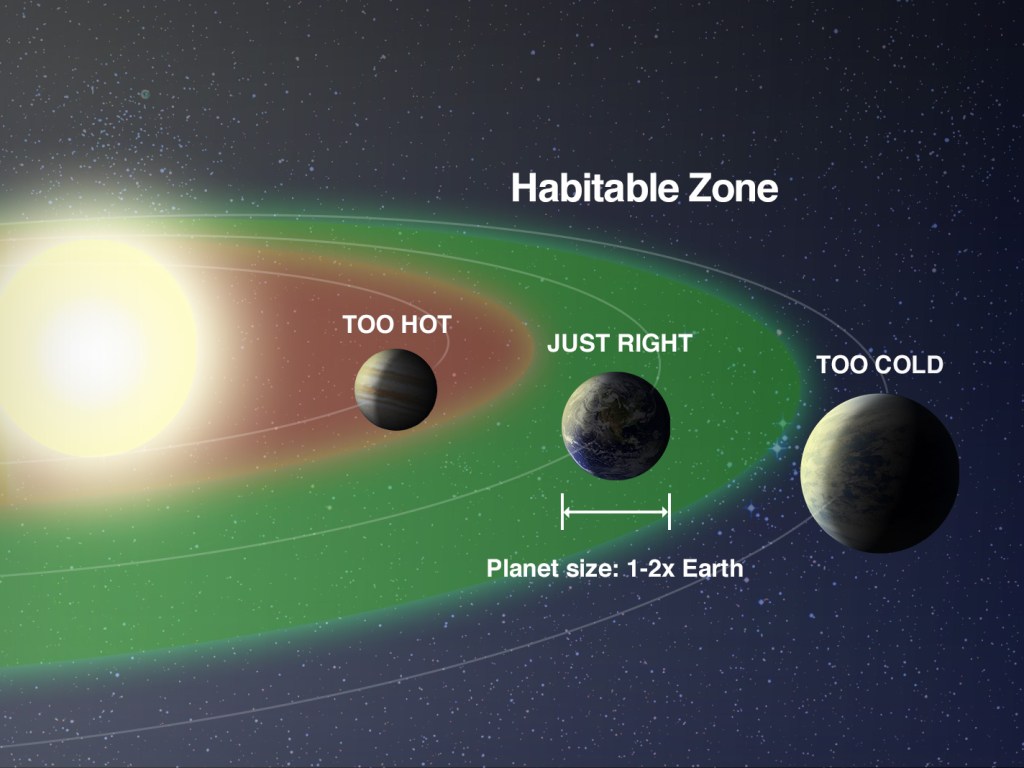
Think of our planet and solar system. The earth is situation in what is referred to as the “habitable zone” relative to its star. The earth is approximately 91 million miles away from the sun. If the earth were 5% closer in distance to the sun (86,450,000 miles) the surface of the planet would be too hot for life, and if it were 5% farther in distance (95,550,000 miles) the planet would be too cold for life. The earth is perfectly situated in its orbit for liquid water and life sustaining conditions to exist.
I say all this to say that given the numerous pieces of evidence regarding the universe, its sustaining constants, and the complexities of various systems (especially in the realm of biology), what is the best explanation for that evidence? When one takes a look at probabilities regarding how the universe could arise as it has, it has been compared to being dealt twelve Royal Flushes in a row while playing poker. Not having drawn some cards to make the hand, rather being dealt five cards at the initial deal and having one Royal Flush after another. It’s believable for a person to be dealt a Royal Flush one time (perhaps once in a lifetime) because the rarity of it and that it has occurred in the past. If a person received two in a row, allegations and speculations of cheating would immediately arise and be justified. This is what the skeptic / atheist has to work with; ridiculously high levels of improbability when one looks to Darwinian evolution and pure naturalism to try and account for the existence of the universe and life itself. (For more, read Stealing From God by Frank Turek and Signature in the Cell by Stephen Meyer).
I leave you with this question: what best explains the appearance of design within the universe? Is it the result of time + matter + chance with a smattering of evolution? Or is there the appearance of design BECAUSE it is designed? If it is designed, Who designed it all? This is where the Christian points to God as the best explanation and the conclusion to the teleological argument.
~In Christ!
[1] Geisler, N. L. (1999). Teleological Argument. In Baker encyclopedia of Christian apologetics (p. 714). Grand Rapids, MI: Baker Books.
[2] Geisler, N. L., & Turek, F. (2004). I don’t have enough faith to be an atheist (p. 95). Wheaton, IL: Crossway Books.
[3] Geisler, N. L. (1999). Teleological Argument. In Baker encyclopedia of Christian apologetics (p. 715). Grand Rapids, MI: Baker Books.
[4] Dawkins, R. (1987). The Blind Watchmaker: Why the Evidence of Evolution Reveals a Universe without Design. (p. 1). New York, NY. W.W. Norton & Company
[5] Geisler, N. L. (2002). Systematic theology, volume one: introduction, Bible (pp. 32–33). Minneapolis, MN: Bethany House Publishers.
 Way Truth Life Apologetics
Leave a comment